

Oct 21, 2026
Template Farms: The Document Fraud Threat Targeting Lenders
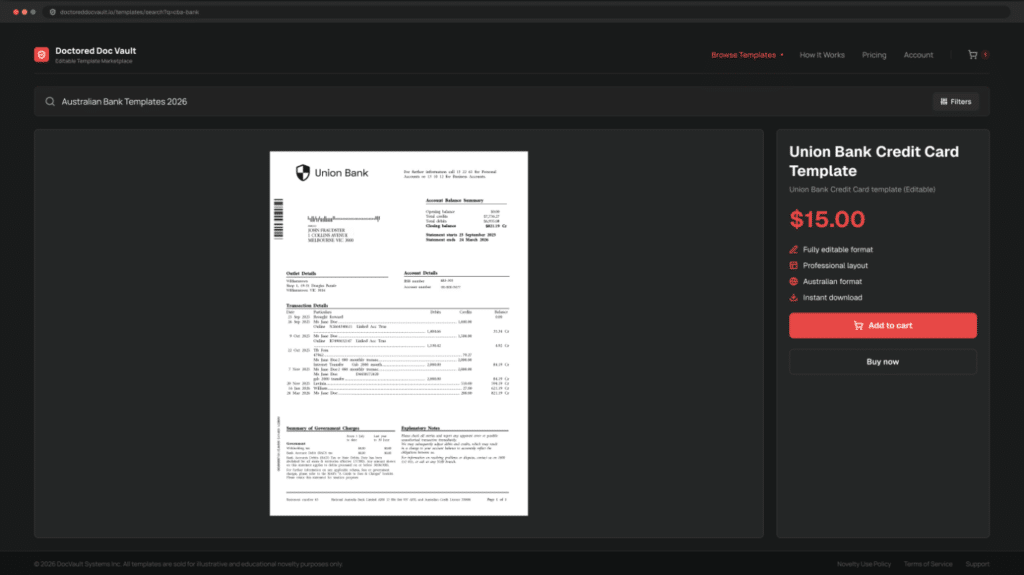
The next fraudulent remuneration advice or tax return a lender receives may not have been created by the borrower. Instead, it may have been bought online from a business whose sole purpose is to make fraudulent documents easier to produce.
These businesses are known as template farms. They sell editable versions of documents such as payslips, bank statements, tax returns, utility bills, invoices, identity documents, and company records. What makes them dangerous is not simply the quality of an individual fake, but the scale and efficiency with which they allow the same underlying document to be reproduced repeatedly.
The financial cost to lenders is significant. In August 2026, the Australian Transaction Reports and Analysis Centre (AUSTRAC) reported that a joint analysis of 10 major banks identified potentially hundreds of millions of dollars in suspected fraudulent mortgage loans. Recurring warning signs included inflated incomes, fabricated business activity and falsified or misleading documents.
For lenders, template farms change the nature of document fraud. What was once a relatively manual exercise is becoming an organised, highly accessible industry.
What Are Template Farms and How Do They Enable Document Fraud?
The term “template farm” can make these operations sound unsophisticated. In reality though, some now resemble conventional ecommerce or software businesses.
They can have searchable catalogues organised by country, document type and issuing organisation. A customer may be able to search for a specific bank statement, remuneration advice or business document and then download an editable version containing the right logos, layout, typography, tables and other elements needed to make it look authentic.
Some offer hundreds or thousands of templates. Others operate through Telegram channels, forums, and private messaging groups. Pricing is often deliberately low, putting convincing financial documents within reach of criminals who would never previously have had the skills to manufacture them.
The level of availability is important because template fraud is fundamentally reusable. Once someone has obtained a convincing source document, it can be stripped of personal information and turned into a master file from which large numbers of new versions can be produced.
How Template Farms Create Serial Lending Fraud Across Multiple Lenders
Template farms are one part of what is sometimes called serial document fraud. A single underlying document can be altered repeatedly, changing the borrower’s name, income, employer, transaction history, or account details each time.
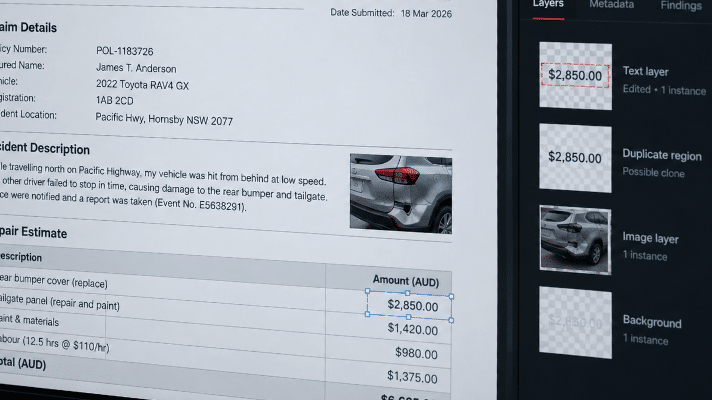
The finished documents may not look identical. One may be saved as a PDF, another converted into an image, and another made to resemble a scan or photograph. Logos and other elements can also be altered. But beneath those superficial changes, the files can retain common characteristics.
Fortiro is seeing evidence of this repeat behaviour across lending markets. “Over the last six months, we’ve stopped hundreds of fraudulent documents related to template farms, and flagged many thousands more, with around 75 per cent of these hitting multiple lenders simultaneously,” says Fortiro Co-Founder and CEO Sean Quagliani.
Fake Payslips, Bank Statements and Business Documents Can Create a Complete Fraud Story
Template farms also make it easier to build a broader supporting narrative around an application.
A fraudulent borrower might use a payslip (pay stub) showing income from a newly created company, supported by bank statements or business documents that appear to reinforce the story. The company may genuinely have been registered. On the surface, the individual pieces can appear to check out.
Sean was recently quoted in the Australian Financial Review (AFR) saying that large bank and non-bank lenders were being hit with documents created by template farms, including one which had its documents submitted across seven Australian lenders.
He continued: “There are hundreds of template farms operating. They disappear and are reborn in different ways, and we never really know who is truly behind them unless, occasionally, law enforcement catches up to them, and we get to learn what the structure is, how it worked, who was involved. You often find it’s quite complex, and it’s offshore.”
Shutting down individual sites is therefore only part of the solution. Template farm operators can move between websites, channels and domains, allowing their catalogues and customers to reappear elsewhere when one operation is disrupted.
“Fortiro processes tens of millions of documents for large and small banks as well as other lenders. Company tax returns and business activity statements are the most frequently created fraudulent documents, at multiples higher than any other type of business paper.”
Sean Quagliani, quoted in the Australian Financial Review
Why Lenders Need Automated Document Fraud Detection
The weakness in traditional document review is that a fraudulently generated payslip/pay stub can still look like a perfectly good document.
The sums may add up. Typography can be correct. The employer can exist. Nothing visible to the assessor reveals how the document was created.
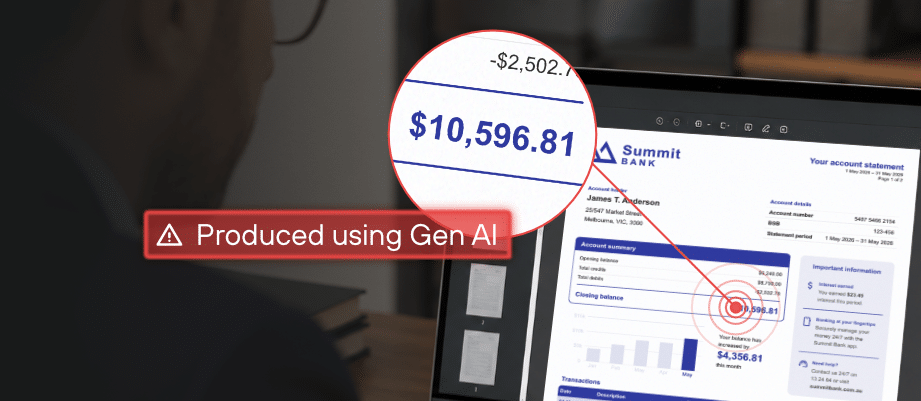
“Fraudsters are becoming increasingly sophisticated. Over half of the documents our customers have flagged as fraudulent contain signals that are not visible to the human eye. Confirmed fraud from AI documents has doubled between April and July 2026,” says Sean.
The challenge for lenders is shifting from simply checking whether the information printed on a document appears credible to understanding the document itself: how it was created, whether it has been manipulated and whether related versions have appeared elsewhere.
Fortiro Protect is built for exactly this shift. Rather than checking whether the information on a document looks plausible, it examines the document itself: its digital structure, formatting and history, to flag signs of tampering or fabrication that aren’t visible on screen. It also compares documents across submissions, so a template farm file reused against several lenders can be identified as part of a pattern, not assessed as an isolated case.
Detection matters even more as template farms move document fraud from a cottage industry towards something much closer to mass production. The fake document is no longer the whole problem. The production line behind it is.

Get a demo today
Get a demo of Fortiro’s income document verification platform to see how it can help you.